
Imptek provides strategic insights on industry and innovation at EFx Emprendedores Ecuador
March 30, 2026
Casa Sotomayor is being renovated and establishing an investment model to preserve and revitalize Quito’s Historic Center
April 9, 2026
Quito, March 2026.—In light of the increase in extreme weather events and rapid urban growth, Ecuador’s construction sector is beginning to embrace the concept of resilient infrastructure with greater vigor. Two key concepts are driving this conversation and call to action: adaptability and resilience.
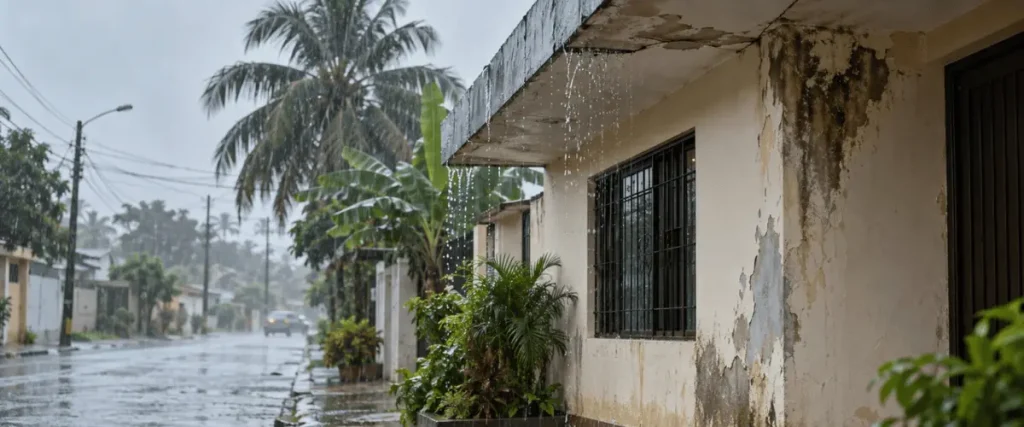
Today, as heavy rains, floods, landslides, and extreme temperatures—both high and low—frequently affect various regions of the country, there is a growing need to design and construct infrastructure capable of anticipating, adapting to, and responding to these conditions. The adaptability of the materials used, construction methods that take these climatic conditions and the new reality into account from the design phase through to the management of building materials (decarbonization), are key to developing construction solutions.
In this context, the concept of resilient infrastructure is gaining traction. More than just a technical term, it is a way of understanding how we build: envisioning buildings and urban systems that can withstand challenges, adapt, and continue to function even when conditions become difficult. Ultimately, it is about planning ahead and building with an eye toward the future, thereby strengthening urban safety and the sustainability of infrastructure.
Phenomena such as El Niño have highlighted the risks faced by roads and highways, drainage systems, and populated areas. As a result, the industry has begun to adopt solutions that place greater emphasis on prevention, particularly in addressing everyday issues such as moisture and leaks, which gradually weaken structures and compromise their proper functioning.
“Today, there are long-lasting alternatives with warranties ranging from 10 to 15 years that meet this challenge. Asphalt membranes protect buildings from harsh weather conditions, while new self-adhesive and reflective options make application easier by cutting installation time in half and meeting recognized quality standards,”says Sebastián Prado, Waterproofing Manager at Imptek Saint-Gobain.
Internationally, resilient construction is gaining increasing prominence. This approach aims not only to reduce environmental impact but also to create infrastructure capable of withstanding and recovering from adverse events, keeping urban life functioning even during difficult times.
“Today, resilience in construction is no longer an option, but a necessity. Incorporating solutions that protect buildings from climatic factors—such as scorching heat and the most demanding urban conditions—not only helps preserve infrastructure but also contributes to people’s well-being and safety. Interior spaces that incorporate acoustic and thermal insulation help reduce noise and create more comfortable environments for living, working, or studying,” says Mauricio Beltrán, developer of the Lightweight Constructionunit at Imptek Saint-Gobain.
When it comes to road infrastructure, this approach also makes sense. Heavy rains have demonstrated the importance of having solutions that allow for faster and more efficient road repairs. “The use of cold mixes, or flexible pavements with modified asphalts and asphalt emulsions designed according to site conditions, traffic demand, topography, and climate, enables better performance of road pavements, increases road safety, and maintains efficient connectivity with safe travel in less time,” notes Pedro Paladines, road business unit manager at Imptek Saint-Gobain.
Globally, this approach to construction is already shaping the future of cities, and in Ecuador it represents a clear opportunity to move toward more resilient and sustainable environments. Amid constant urban growth, prioritizing resilience not only addresses current challenges but also encourages us to envision a more mindful approach to development—one capable of adapting to what lies ahead.
About Imptek:
Imptek-Chova del Ecuador S.A. is an Ecuadorian company of the Saint-Gobain Group with 45 years in the waterproofing, road and light construction market.
Its commitment to quality and innovation, its implementation of best practices, its national and international certifications, its qualified staff, and its environmentally responsible practices are just some of the reasons why it ranks among Ecuador’s top 1,000 companies. Since 2021, it has been certified as a Great Place to Work. Imptek has been exporting its products for 30 years to more than 8 countries in Latin America
- 18 million in sales in 2024
- 100 employees, locations in 1 country
- Committed to achieving carbon neutrality by 2050
For more information about Imptek, visit us athttp://www.imptekcorp.comandfollow us onLinkedIn,Facebook,Instagram,YouTube, andTikTok.
About Saint-Gobain:
A world leader in lightweight and sustainable construction, Saint-Gobain designs, manufactures and distributes materials and services for the construction and industrial markets. Its integrated solutions for the renovation of public and private buildings, lightweight construction and the decarbonization of construction and industry are developed through a process of continuous innovation and deliver sustainability and performance. The Group, which celebrates its 360th anniversary in 2025, remains more committed than ever to its purpose "MAKING THE WORLD A BETTER HOME".
- €46.6 billion in sales in 2024
- 161,000 employees, presence in 80 countries
- Committed to achieving zero net carbon emissions by 2050
For more information about Saint-Gobain, visit us atwww.saint-gobain.comandfollow us on X@saintgobain